Bitcoin Stalls Below $65,000 Amid Rising Middle East Tensions
Bitcoin struggles to hold gains as geopolitical risk in the Middle East weighs on investor sentiment across risk assets.
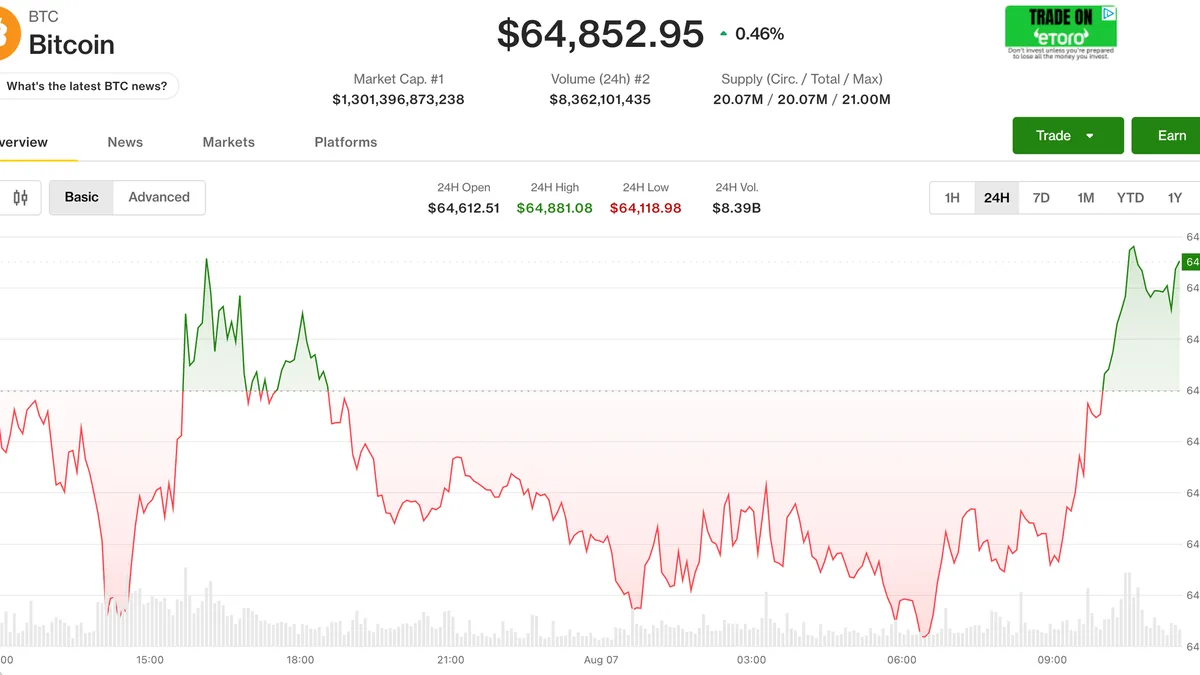
Bitcoin has been trading in a cautious range below the $65,000 threshold as escalating tensions in the Middle East inject fresh uncertainty into global financial markets. The cryptocurrency, often characterized as a high-beta risk asset in the short term, tends to lose momentum when investors rotate toward traditional safe havens such as gold, U.S. Treasuries, and the dollar during periods of geopolitical stress.
The pattern playing out now is familiar to seasoned crypto observers. When conflict risk intensifies, institutional and retail participants alike tend to reduce exposure to volatile assets first, and digital currencies frequently absorb a disproportionate share of that selling pressure. Bitcoin's inability to sustain a push above $65,000 reflects that dynamic clearly, even as its longer-term bull case — rooted in supply constraints following the April halving and steady ETF inflows — remains structurally intact.
Read more Private Equity Eyes Budget Airlines After Apollo-EasyJet Deal →
What makes this moment analytically interesting is the tension between two competing narratives. On one hand, Bitcoin has increasingly been marketed as a form of "digital gold" — a non-sovereign store of value that should theoretically benefit from geopolitical disorder. On the other, real-world trading behavior continues to show that in acute risk-off episodes, Bitcoin correlates more closely with equities than with gold, undermining that thesis in the near term.
For investors watching price action, the $65,000 level has emerged as a meaningful technical reference point. A sustained break above it could signal renewed confidence and draw in sidelined capital, while continued failure to clear it may invite further consolidation or downside testing. How the Middle East situation evolves in the coming days will likely be the dominant macro variable shaping crypto market direction in the near term.
Continue reading at CoinDesk.