Iranian President Vows No Surrender to U.S. During India Visit
Masoud Pezeshkian rejects capitulation to Washington and Tel Aviv as India's Modi calls for dialogue and restraint.
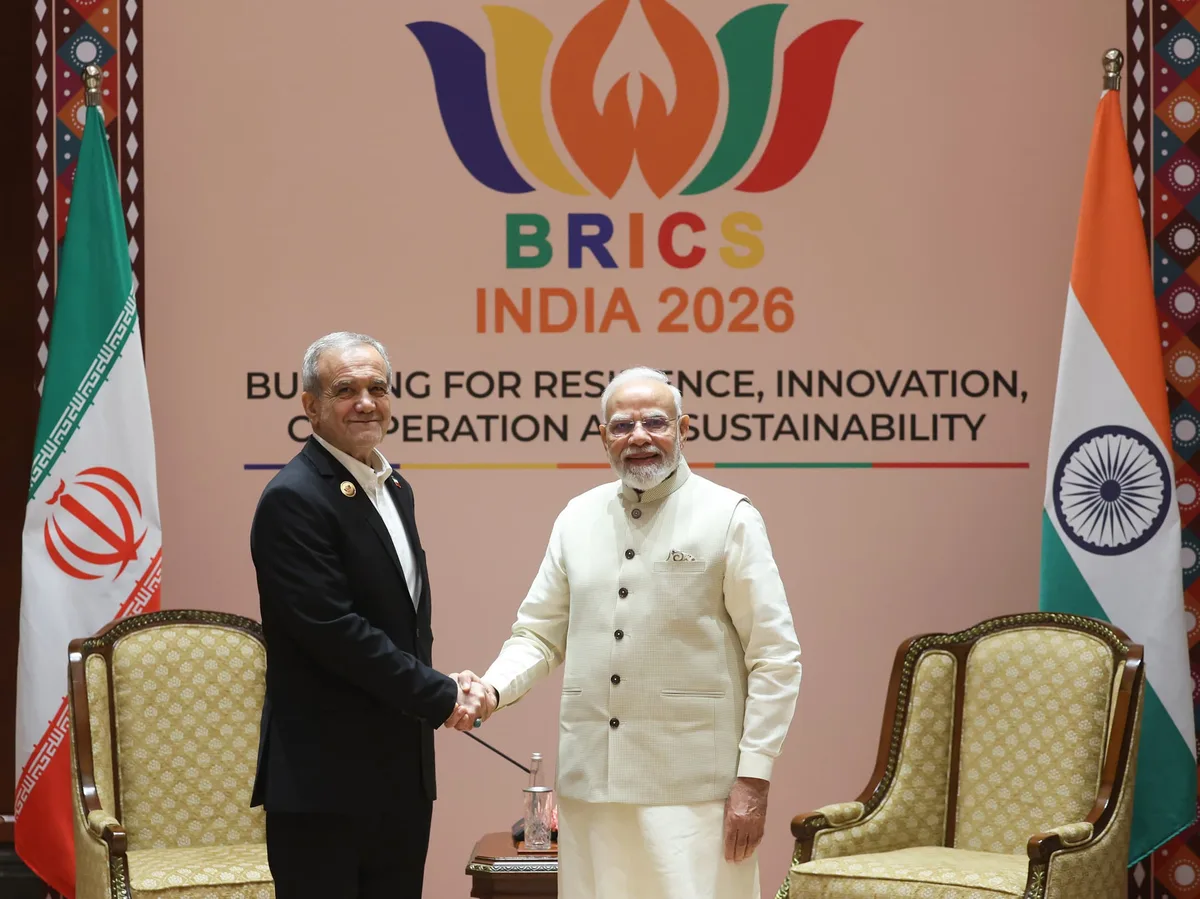
Iranian President Masoud Pezeshkian used his first official visit to India to deliver an unambiguous message: Tehran will not yield to pressure from the United States or Israel. The declaration came as diplomatic tensions surrounding Iran's nuclear program and its regional posture remain at a critical juncture, underscoring how deeply the Islamic Republic's leadership feels compelled to project defiance even on foreign soil.
The choice of India as the venue for this statement carries its own significance. New Delhi has long cultivated a foreign policy of strategic autonomy, maintaining working relationships with Washington, Tehran, and Tel Aviv simultaneously — a balancing act that reflects India's interest in Persian Gulf energy supplies, regional trade routes, and its own security calculus. Prime Minister Narendra Modi's parallel call for dialogue and peace signals that India is not willing to be drawn into the orbit of any single power's confrontational posture.
Read more Iran's President Vows No Surrender to US as India Calls for Peace →
Pezeshkian's visit arrives at a moment when Iran faces sustained economic pressure through sanctions, ongoing uncertainty about the fate of nuclear diplomacy, and a volatile Middle East landscape shaped by continued conflict. His rhetoric of resistance is partly aimed at domestic audiences who expect their leaders to project strength, but it also serves as a signal to potential partners — including India — that Iran intends to remain an independent actor rather than a negotiating supplicant.
For analysts watching the broader arc of U.S.-Iran relations, the optics of this visit matter. India's refusal to simply echo Western positions on Iran offers Tehran a measure of diplomatic legitimacy at a time when it is largely isolated from Western capitals. Whether that legitimacy translates into any tangible shift in Iran's strategic position, however, remains far from certain given the asymmetry of economic and military pressures involved.
Continue reading at US Top News and Analysis.