
SK Hynix's $720 Billion Bet on AI Memory Dominance
The world's top high-bandwidth memory maker is spending $720B on new factories as AI demand reshapes South Korea's industrial landscape.
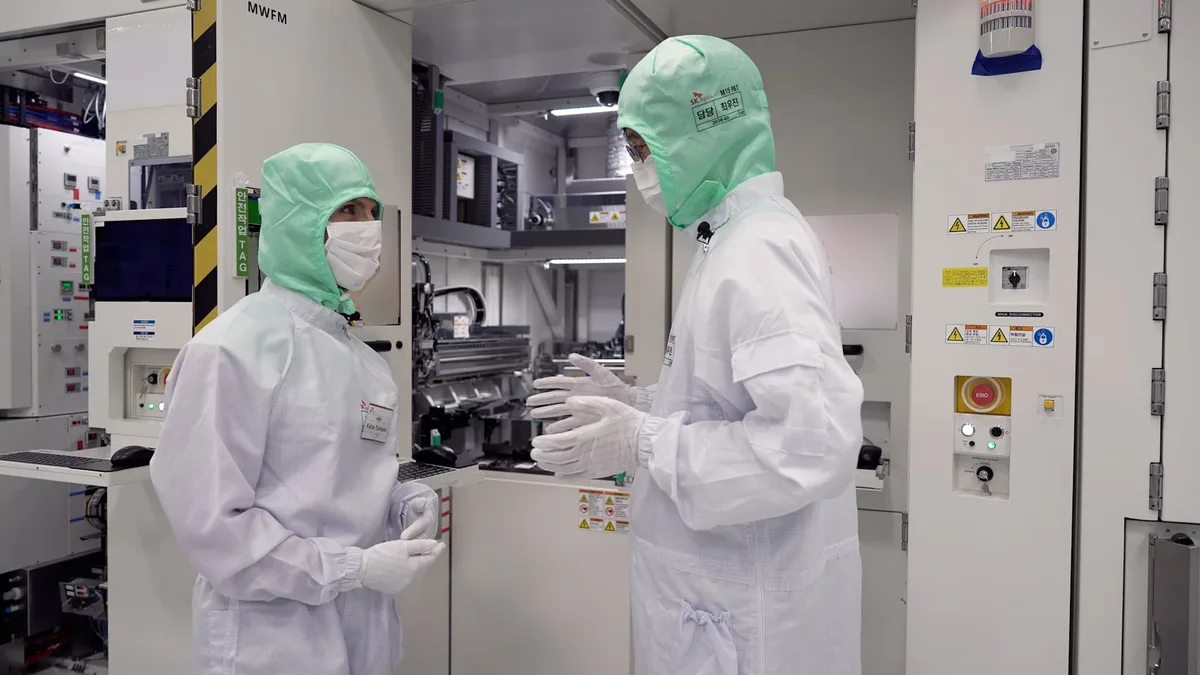
Few industrial commitments in the modern era match the scale of what SK Hynix is undertaking. The South Korean chipmaker, already the dominant global supplier of high-bandwidth memory (HBM), has announced a staggering $720 billion capital buildout aimed squarely at satisfying the insatiable appetite that artificial intelligence workloads have created for advanced memory chips. The investment signals not just corporate ambition, but a structural shift in how nations and companies are positioning themselves at the foundation of the AI economy.
HBM has become the indispensable ingredient inside the GPU clusters that power large language models and generative AI platforms. Unlike conventional DRAM, high-bandwidth memory stacks multiple chips vertically to deliver far greater data throughput — exactly what AI training and inference demand. SK Hynix's early lead in this niche has made it a critical supplier to Nvidia and other semiconductor giants, and the company is now racing to ensure that lead is not merely maintained but dramatically extended.
The scale of the buildout is transforming South Korea itself. New fabrication facilities of this magnitude require enormous infrastructure investment — in land, energy grids, water systems, and a highly skilled labor force — effectively reorganizing regional economies around the factory campuses. This is a pattern familiar from Taiwan's TSMC-driven development, and South Korea appears to be doubling down on a similar industrial-policy logic: anchor the most technically demanding part of the global chip supply chain at home.
What makes this moment strategically significant is the compressed timeline. AI hardware demand is evolving faster than traditional semiconductor investment cycles, meaning SK Hynix is committing capital to technology generations that are still being defined. The company secured an exclusive first-look partnership with US Top News and Analysis to document the buildout, suggesting leadership is confident enough in its trajectory to invite public scrutiny at an unusually early stage.
For investors and policymakers watching the semiconductor race, SK Hynix's commitment reframes the conversation: memory, long considered a commodity business prone to brutal price cycles, has become a high-stakes strategic asset. Continue reading at US Top News and Analysis.