Wall Street Backs Nvidia's New Vision for AI Infrastructure
Nvidia's Jensen Huang has pitched a bold new model for funding AI expansion, and Wall Street appears ready to follow.
For more than three years, the artificial intelligence infrastructure boom has run on a relatively straightforward financial playbook: major technology companies tapped equity and debt markets at record levels to fund the chips, data centers, and software pipelines underpinning the AI revolution. That model, while extraordinarily effective at channeling capital into the sector, has always concentrated both the risk and the reward among a handful of hyperscale players.
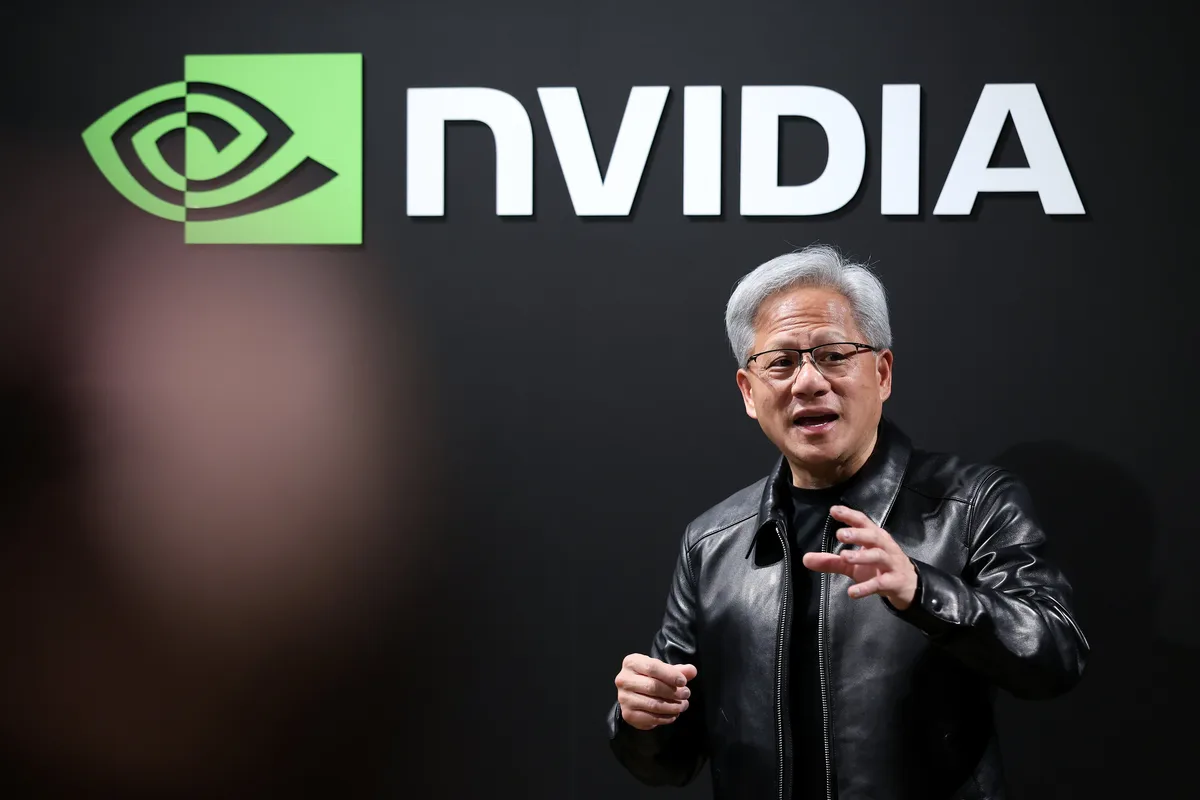
Now Nvidia chief executive Jensen Huang is proposing something different. The semiconductor giant, which has become the de facto backbone of AI computing through its dominance in graphics processing units, has introduced what Wall Street is calling a 'big concept' — a structural reimagining of how AI infrastructure gets financed and deployed at scale. The specifics of the framework position Nvidia not merely as a hardware supplier but as a more central architect of the broader AI economy.
Read more Nvidia's Strategy to Become an Asset Class: Risk and Reward →
The endorsement from Wall Street carries real weight. Financial markets have functioned as the ultimate referendum on AI's long-term viability, and investor enthusiasm for Huang's vision signals a belief that the next phase of the build-out requires a fundamentally different capital structure — one that may distribute participation more broadly than the current hyperscaler-dominated model allows.
What remains to be seen is whether the practical execution can match the ambition of the concept. The first era of AI investment was defined by speed and scale; the next may be defined by architecture and sustainability. If Nvidia's framework takes hold, it could reshape not only how AI infrastructure is funded but also which companies sit at the center of that ecosystem going forward — a shift with profound implications for competition, valuation, and long-term market structure.
Continue reading at US Top News and Analysis