Why Wage Growth Often Signals Where Inflation Is Headed
Wage growth has long served as a forward-looking gauge for inflation. Understanding the relationship helps contextualize Fed policy decisions.
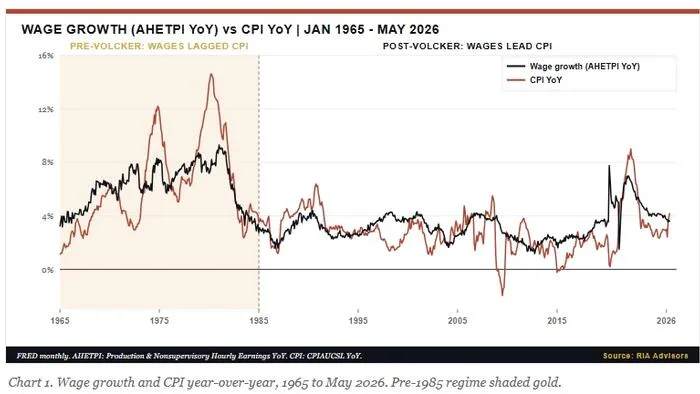
Among the more reliable forward-looking signals economists watch when forecasting inflation is the pace of wage growth. When workers earn more, consumer spending tends to follow, and businesses facing higher labor costs frequently pass those expenses along through higher prices — a transmission mechanism that has shaped central bank thinking for decades.
The relationship is not instantaneous. Wage gains typically feed into broader price levels with a lag, which is part of why policymakers treat labor market data as a leading rather than coincident indicator of inflationary pressure. A tight labor market that drives up wages today can translate into sustained price increases months down the road, complicating the Federal Reserve's task of calibrating interest rates in real time.
Read more Inflation Outpaces Wage Growth Again, Eroding Real Pay →
This dynamic also explains why the Fed has historically paid close attention to metrics like average hourly earnings and the employment cost index alongside more headline-grabbing inflation readings such as the Consumer Price Index. When wage growth runs persistently above levels consistent with the Fed's 2 percent inflation target — accounting for productivity gains — policymakers tend to view that as a structural, rather than transitory, inflation risk.
The analytical value of tracking wages as a leading inflation indicator lies precisely in its predictive window. Unlike CPI, which captures price changes that have already occurred, wage data can give policymakers and investors a few months of runway to anticipate where consumer prices may drift. That predictive gap, however modest, is significant in an environment where the Fed has repeatedly been caught behind the curve on inflation turning points.
Continue reading at zerohedge for the full proprietary analysis behind this framework.