AMD Acquires AI Chip Startup That Embeds Models Directly in Silicon
AMD has purchased a chip startup whose technology hardwires AI models into hardware, signaling a deeper push into purpose-built AI silicon.
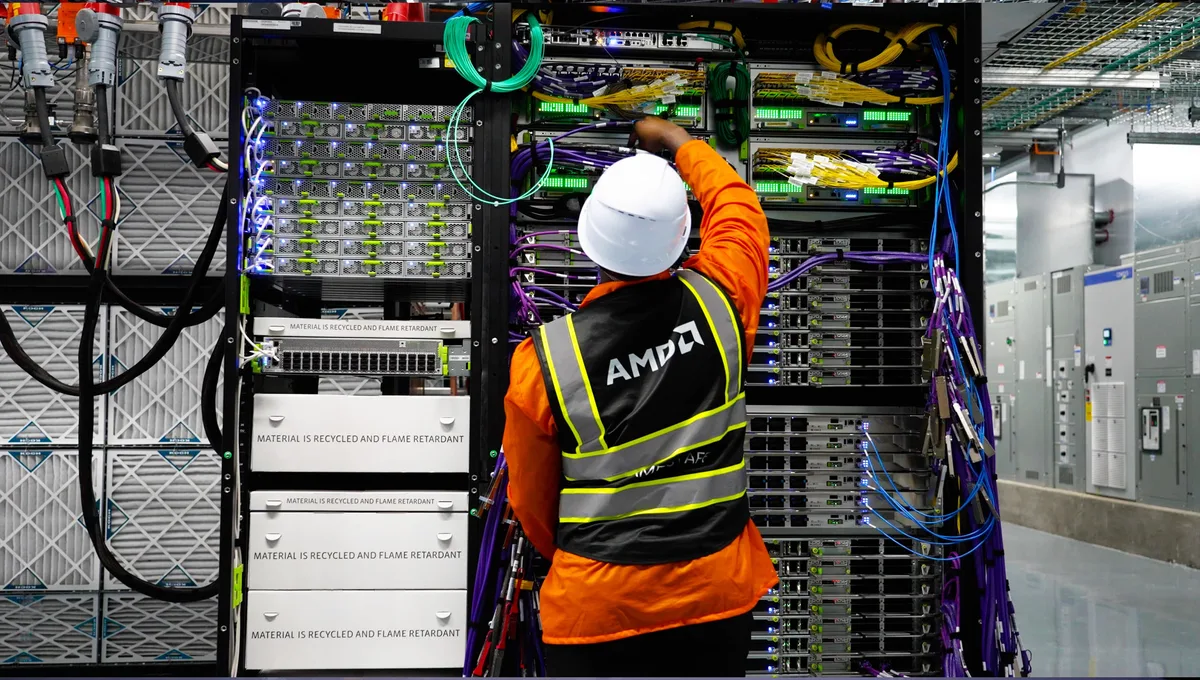
Advanced Micro Devices has acquired a chip startup focused on embedding artificial intelligence models directly into silicon, a move that underscores the accelerating race among semiconductor companies to build hardware specifically optimized for AI workloads rather than relying on general-purpose processors adapted after the fact.
The startup, Taalas, has developed chips that physically encode AI models into the hardware itself — an approach sometimes called model-in-silicon or hardwired inference. Its current chip runs a compact version of Meta's Llama 3.1 large language model, though the company has been developing next-generation chips capable of handling larger and more sophisticated models. The strategy represents a meaningful architectural departure from the GPU-centric paradigm that has dominated AI compute since the generative AI boom began.
Read more MoneyPass Group Launches as Independent ATM Network Company →
The acquisition signals that AMD views dedicated, model-specific silicon as a credible path to competing more aggressively in the AI inference market, where the cost and energy efficiency of running trained models at scale has become a critical differentiator. By hardwiring model weights and logic directly into chips, companies like Taalas aim to dramatically reduce latency and power consumption compared with loading models dynamically onto conventional processors.
For AMD, which has spent years closing the gap with Nvidia in AI accelerators, buying its way into this architectural niche could diversify its AI hardware portfolio beyond the MI-series GPU line. The broader industry is watching closely, as several startups have pursued similar hardwired or analog inference approaches, and consolidation through acquisition appears to be accelerating. Whether embedded-model silicon can scale to frontier AI workloads remains an open engineering question, but AMD's bet suggests the company believes the answer is yes.
Continue reading at US Top News and Analysis