Bitcoin's BIP-110 Debate Shows Free-Market Forces at Work
The BIP-110 episode reveals how Bitcoin's decentralized governance mirrors free-market capitalism, letting stakeholders vote with their choices.
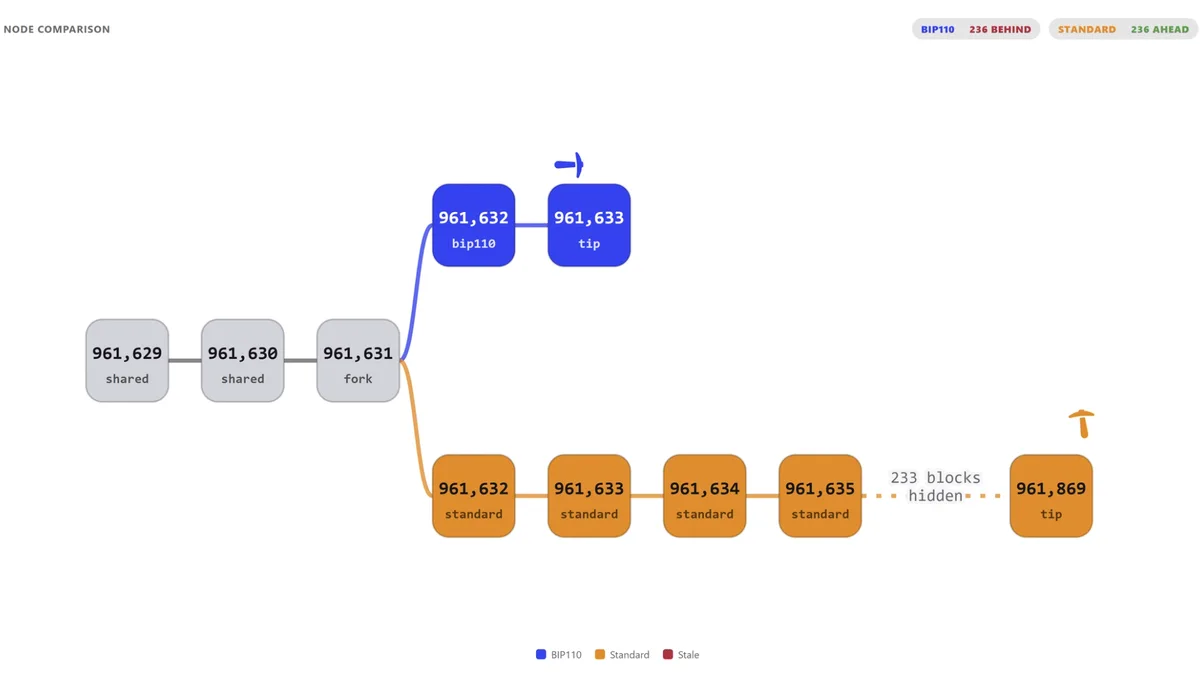
Bitcoin's governance model has long defied easy categorization, sitting somewhere between anarchic consensus and structured protocol development. The debate surrounding BIP-110 — a Bitcoin Improvement Proposal that stirred significant discussion across the developer and mining communities — offers a clarifying lens through which to understand how the network actually evolves, and why that process, messy as it appears, may be its greatest strength.
At its core, the BIP-110 episode illustrates a dynamic familiar to students of economic theory: competing interests, absent a central authority, negotiating outcomes through voluntary coordination. Miners, node operators, developers, and investors each hold a different slice of influence, and none can unilaterally impose change. That distributed veto power forces compromise or, failing that, stalemate — outcomes that in traditional corporate governance would be resolved by executive fiat or shareholder vote.
Read more US Stocks Diverge as Oil and Yields Surge on Iran Tensions →
What makes this particularly instructive is how closely the process maps onto classical free-market principles. Proposals rise or fall not because a regulator or board approves them, but because enough participants find them worth adopting. The market for protocol changes is, in this reading, as close to a pure preference-revelation mechanism as modern finance has produced. Stakeholders signal value through action — running software, mining blocks, transacting — rather than through lobbying or litigation.
Critics will note that this system can also produce gridlock, favoring incumbents and making beneficial upgrades difficult to ship. Bitcoin's block-size wars remain the canonical cautionary tale. Yet proponents argue that the high friction is a feature: a protocol that is hard to change is also hard to corrupt. The asymmetry between the cost of bad changes and the cost of delayed good ones, they contend, tilts toward caution as the rational default.
For observers of both technology policy and financial markets, the BIP-110 moment is worth watching precisely because it tests whether decentralized governance can remain agile enough to remain relevant. The answer will have implications far beyond one improvement proposal. Continue reading at CoinDesk.