SK Hynix's $720 Billion Bet on AI Memory Dominance
The world's top high-bandwidth memory maker is investing $720B in new factories as AI demand reshapes South Korea's industrial landscape.
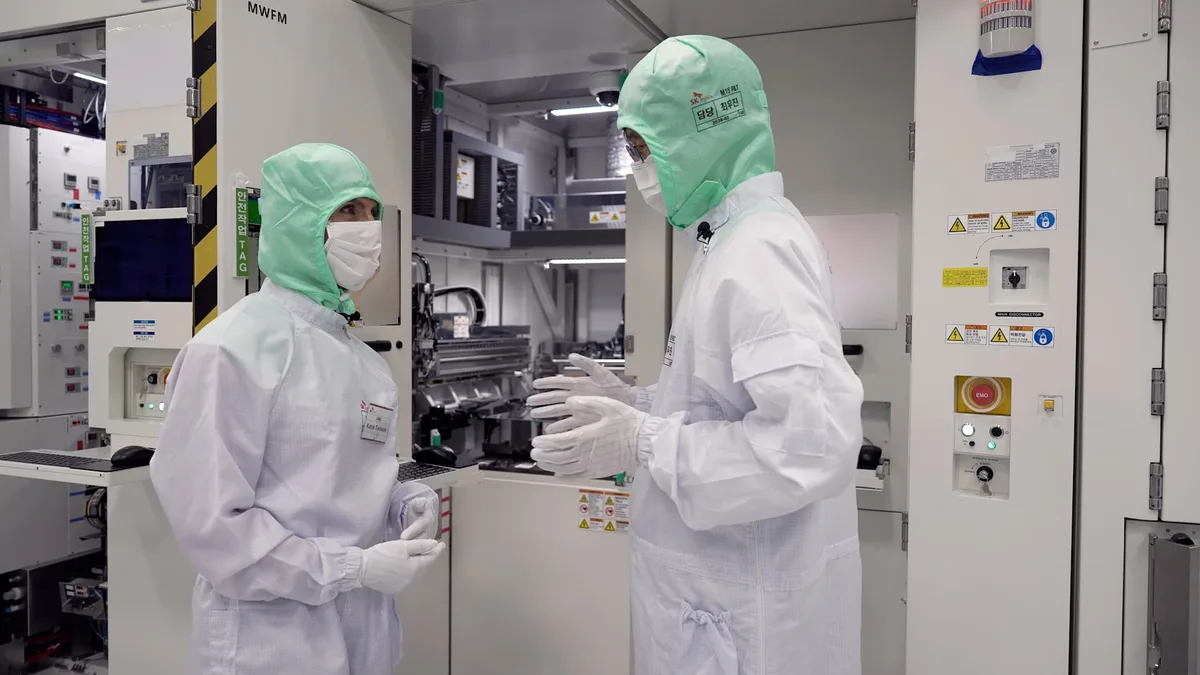
Few corporate spending commitments in the global semiconductor industry rival the scale of what SK Hynix is undertaking. The South Korean chipmaker, which holds the leading position in high-bandwidth memory — the specialized chip architecture that powers AI accelerators from Nvidia and others — is committing $720 billion to an expansive factory buildout that is fundamentally reshaping the country's industrial geography. An exclusive first look at those facilities underscores just how seriously the company is treating the AI supercycle as a structural, not cyclical, shift in demand.
High-bandwidth memory, or HBM, has emerged as one of the most strategically critical components in the AI hardware stack. Unlike conventional DRAM, HBM stacks multiple memory dies vertically to deliver dramatically faster data throughput, a property essential for training and running large language models. SK Hynix's early lead in HBM production has made it an indispensable supplier to the AI industry, and the $720 billion commitment signals the company intends to defend and extend that advantage aggressively over the coming decade.
Read more Apple Opens Free Manufacturing Training Hub in Houston →
The scale of the investment carries broader economic implications for South Korea, a nation that has long relied on semiconductor exports as a pillar of its trade balance. A buildout of this magnitude draws on domestic construction, engineering talent, and supply chains in ways that ripple well beyond the chip sector itself. It also intensifies the geopolitical weight of South Korean chipmaking at a moment when the United States, China, and the European Union are all competing to secure reliable access to advanced memory and logic semiconductors.
For investors and industry analysts, the central question is whether AI infrastructure spending will sustain the demand trajectory that justifies a commitment of this size. SK Hynix's leadership appears to be making a high-conviction wager that the answer is yes — that the buildout of data centers, AI inference hardware, and next-generation model training will continue to absorb memory capacity at a pace that rewards aggressive capital deployment now rather than cautious incrementalism later. Whether that thesis proves correct will determine not just SK Hynix's fortunes, but the competitive balance of the global memory industry for years to come.
Continue reading at US Top News and Analysis