Asia Markets Rattle as AI Selloff, Iran Strikes, and Dollar Pressure Collide
A turbulent Asian session combined tech stock declines, Middle East escalation, and currency stress into a broad risk-off move.
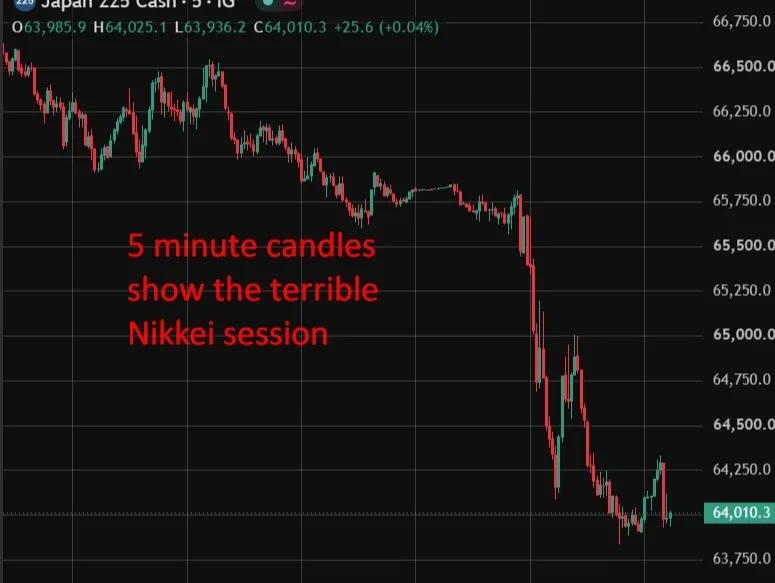
Asian markets endured a bruising session on July 17 as a confluence of forces — a reversal of the AI-driven equity rally, widening US military strikes against Iran, and fresh currency pressure across emerging markets — converged to push investors firmly into defensive mode. The Nikkei dropped as much as 4.25% at its worst point, dragging Nasdaq futures lower by roughly 1%, signaling that the turbulence was not confined to the Asia-Pacific region.
The geopolitical dimension was particularly acute. US strikes against Iranian infrastructure entered their sixth consecutive day, with reported targets expanding to include bridges near Bandar Abbas and, in unconfirmed reports, the King Fahd Causeway linking Bahrain to Saudi Arabia. The broadening geographic footprint of the conflict — with strikes also reported in Jordan, Bahrain, and Kuwait — kept oil prices elevated and on track for their largest weekly gain since April, even as supply routes faced mounting disruption.
Read more Binance Expands Into Gold and Silver Options Trading →
Currency markets reflected the same anxiety. India's rupee approached record lows despite active intervention by the Reserve Bank of India, weighed down by rising oil import costs and broader risk aversion. China's currency regulator, SAFE, publicly characterized the yuan market as "stable and resilient" — language that typically signals official sensitivity to depreciation pressure — while the People's Bank of China set its USD/CNY reference rate at 6.7934, notably weaker than market estimates of 6.7734.
On the policy front, Fed Vice Chair Jefferson offered a carefully balanced message: current monetary policy is well positioned, but a rate hike remains on the table if inflation proves stickier than expected. That conditional hawkishness, arriving amid already fragile sentiment, added another layer of caution for rate-sensitive assets. Separately, Bernstein raised its 2026 gold price target to $4,533, citing central bank accumulation and expectations that Fed rate increases will remain limited — a forecast that underscores how deeply uncertainty has embedded itself in long-horizon financial planning.
The session also carried political undertones. President Trump's renewed claims attributing a 2020 election breach to China threatened to complicate the fragile trade truce ahead of a scheduled meeting with President Xi, injecting diplomatic risk into an already crowded threat landscape. Continue reading at Forexlive.