June CPI Drop Masks Stubborn Services Inflation, Fed Dilemma
A gasoline-driven fall in June CPI may flatter the headline, but core and services inflation keep pressure on the Federal Reserve.
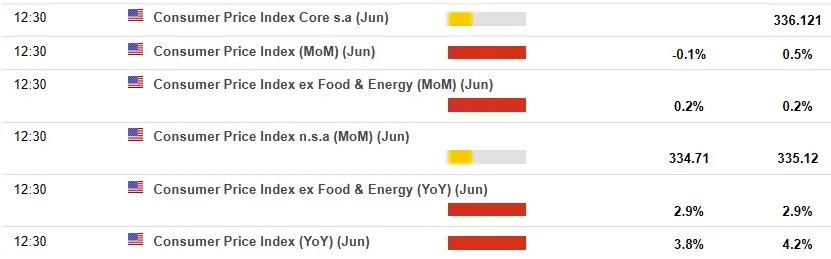
US consumer prices are expected to have declined in June for the first time since the pandemic, but the story behind that number is far less reassuring than the top line suggests. Economists forecast a 0.2% monthly drop in the consumer price index, driven almost entirely by a 15% slide in gasoline prices between mid-May and late June. The annual headline rate is projected to ease to 3.8% from May's 4.2% — itself the highest reading since April 2023 — yet that improvement owes almost nothing to a genuine, broad-based cooling of consumer prices.
Strip out food and energy, and the picture is considerably more uncomfortable for policymakers. Core CPI is expected to dip only slightly to 2.8% annually from 2.9% in May, a figure that has actually crept higher since the start of the year when it stood at 2.5%. Even more telling is the acceleration in services inflation — covering rent, car repairs, dining, and recreation — which is running at a 3.4% annual pace, well above both its January reading of 2.9% and the 2010–2019 average of 2.6%. For the Federal Reserve, this is the data that matters most: underlying price pressures are not retreating in the categories most sensitive to domestic demand and labor costs.
Read more Fed Expected to Hold Rates Steady: What It Means for You →
The timing places new Fed Chair Kevin Warsh in a delicate position as he prepares for his first congressional testimony since taking the role in May. He must project credible resolve on inflation without signaling rate increases aggressive enough to tighten credit conditions further. That balancing act grows more complicated by volatile energy markets: oil rebounded to around $75 a barrel Monday after a fragile ceasefire between the US and Iran broke down, reintroducing two-way risk to the energy component that had been providing temporary relief at the pump.
The broader analytical takeaway is that markets should resist reading a negative monthly CPI print as evidence that inflation is decisively beaten. A gasoline price reversal, which is entirely possible given geopolitical uncertainty in the Middle East, could push headline inflation sharply higher again within months. The Fed's actual problem — sticky services costs and a core rate trending in the wrong direction since January — remains unresolved. June's numbers, due at 8:30 a.m. Eastern on July 14, are likely to produce a headline that looks good and an underlying report that does not.
Continue reading at Forexlive.