Oil Climbs 3.5% as US-Iran Conflict Shuts Strait of Hormuz
WTI crude surged while equities wavered as the Strait of Hormuz closure and ongoing US-Iran strikes kept energy markets on edge.
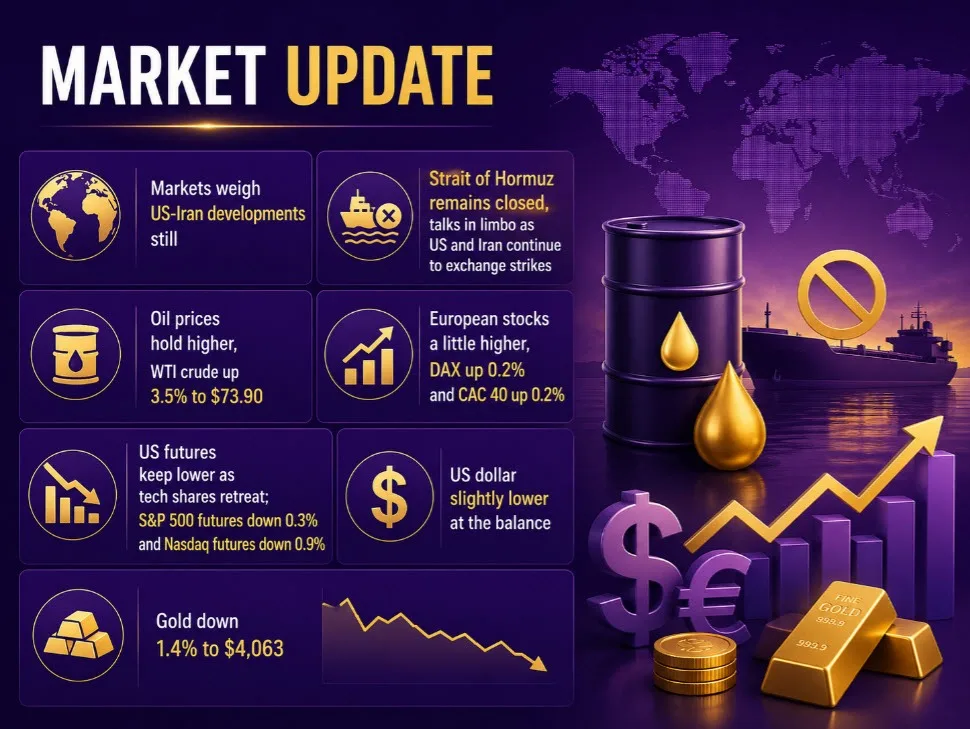
Oil prices are holding near recent highs as the geopolitical standoff between the United States and Iran shows little sign of de-escalation. WTI crude climbed 3.5% to $73.90 per barrel during the European session, with the Strait of Hormuz — one of the world's most critical energy chokepoints — effectively closed to traffic amid continued exchanges of strikes between the two nations. That supply-route disruption is providing a powerful floor beneath oil prices, even as broader risk sentiment turns cautious.
The diplomatic picture remains bleak. Iran reiterated it will not honor any agreement as long as it believes the US is failing to uphold its own commitments, while mediators acknowledged they are still working to find a path forward. The absence of direct talks between Washington and Tehran, combined with an active military exchange, creates the kind of sustained uncertainty that energy markets find hardest to price efficiently — and that typically keeps crude elevated.
Read more Binance Expands Into Gold and Silver Options Trading →
Elsewhere in markets, the risk-off mood was real but not acute. European equities managed modest gains while US futures told a more cautious story — S&P 500 futures slipped 0.3% and Nasdaq futures fell 0.9%, with technology shares bearing the brunt of the selling pressure. The dollar, often a refuge in geopolitical stress, actually softened slightly during the London session: EUR/USD edged up to 1.1430 and GBP/USD steadied near 1.3390 after early losses were pared back.
Fixed income and precious metals delivered a mixed signal. Ten-year Treasury yields ticked up one basis point to 4.579%, flirting with June highs, while gold — another traditional safe haven — fell 1.4% to $4,063, suggesting some investors are rotating toward cash rather than classic hedges. Bitcoin slipped 2% to $62,863. USD/JPY pulled back slightly to 162.10 amid Japanese headlines about the Government Pension Investment Fund's portfolio adjustments, adding another layer of complexity to yen dynamics.
Looking ahead, the Federal Reserve's policy trajectory will share the spotlight with Middle East developments. Fed Governor Williams signaled he would back rate hikes if monthly core inflation averages above 0.2%, a threshold that frames the stakes around the upcoming US CPI report — the week's marquee data release. How inflation prints alongside an oil shock will be a critical test for markets already navigating elevated uncertainty. Continue reading at Forexlive.