Oxford Union Debate Cancellation Reveals Britain's Free Speech Fault Lines
A controversy at Oxford's historic debating society lays bare how free speech protections in Britain differ sharply from American norms.
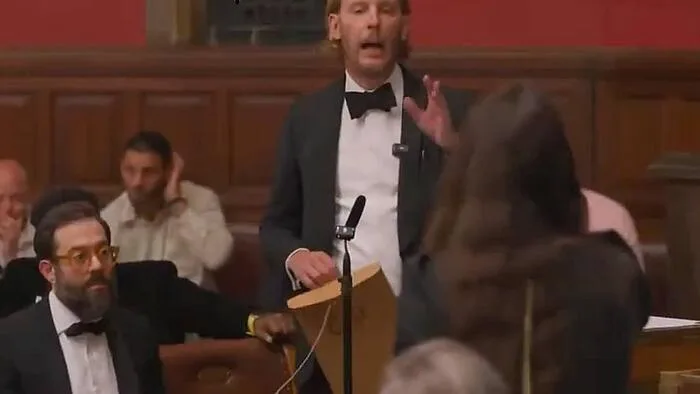
The Oxford Union, one of the world's most storied debating forums, has long positioned itself as a bastion of unfettered discourse — a place where controversial figures from across the ideological spectrum could argue their views before some of Britain's brightest students. But a recent debacle involving a canceled or disrupted debate has thrown that self-image into sharp relief, raising questions about where the practical limits of free expression actually sit in contemporary British society.
Unlike the United States, where First Amendment protections create a broad constitutional floor for speech — however offensive or provocative — the United Kingdom operates under a different legal and cultural framework. British law includes provisions on hate speech, incitement, and public order that give authorities and institutions considerably more latitude to restrict expression. What Americans might regard as protected opinion can, in certain contexts, constitute a criminal or civil offense under English law. The Oxford Union incident underscores how even elite private institutions are not immune to these wider societal pressures.
Read more Central NY Food Banks Receive 140,000 Eggs From AG Settlement →
The episode also reflects a generational and ideological tension playing out on campuses across the Western world. Student bodies increasingly expect institutions to curate who gets a platform, while administrators and older alumni tend to defend an older liberal consensus that values exposure to disagreement over protection from it. Neither camp is monolithic, and the debate itself — about who controls the terms of debate — is arguably more revealing than whatever specific argument prompted the controversy.
For observers of British civil society, the real significance may be less about any individual speaker or motion and more about the institutional signal sent when a venue historically defined by its tolerance for uncomfortable ideas walks back that commitment. Credibility in the debate space is built over decades and can erode quickly when expediency overrides principle.
The Oxford Union incident is unlikely to resolve the broader argument about speech norms in Britain anytime soon, but it adds a high-profile data point to a conversation that shows no sign of cooling. Continue reading at zerohedge.