U.S. Auto Industry Braces for Uncertainty Over USMCA Trade Deal
Automakers face growing risk as the USMCA trade deal's future remains unclear, with rules of origin at the center of the debate.
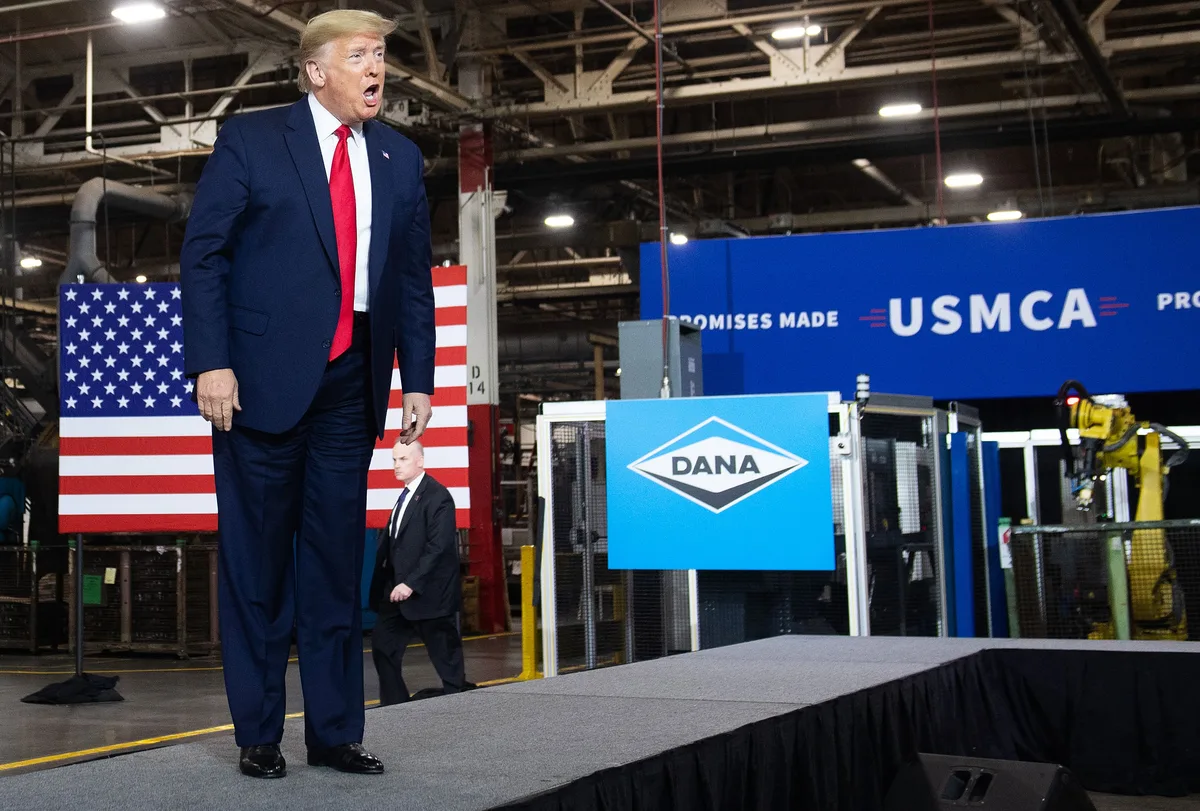
The American auto industry is entering a period of heightened uncertainty as questions mount over whether the United States-Mexico-Canada Agreement will be extended, leaving manufacturers to navigate an increasingly unpredictable trade environment. The deal, which replaced NAFTA in 2020, has served as the foundational framework governing cross-border commerce among North America's three largest economies — and its potential lapse carries significant consequences for one of the continent's most integrated supply chains.
At the heart of the dispute are the agreement's rules of origin, which are the technical provisions that determine where a given product is deemed to have been manufactured and, crucially, whether it qualifies for preferential tariff treatment. For automakers, these rules dictate how much of a vehicle's content must be sourced from within North America for the finished product to move across borders duty-free. Any disruption to this framework would ripple through a supply chain that spans thousands of parts suppliers across three countries.
Read more Taco Bell Cyclospora Outbreak Clouds Yum Brands Earnings Outlook →
The stakes are particularly high because modern vehicle assembly is deeply multinational by design. Components may cross the U.S.-Mexico or U.S.-Canada border multiple times before a finished car rolls off the line. Without the legal certainty that USMCA provides, automakers could face higher input costs, supply chain restructuring expenses, and pricing pressure that ultimately reaches consumers. The industry's capital-intensive nature makes it especially vulnerable to sudden policy shifts, since production decisions are typically planned years in advance.
Analysts note that USMCA includes a mandatory review clause that allows any of the three member governments to call for renegotiation, and that political dynamics in all three countries could complicate a straightforward extension. For an industry already absorbing the costs of electrification and shifting consumer demand, added trade uncertainty represents one more variable that executives would strongly prefer to eliminate. How governments choose to handle the agreement's renewal will carry meaningful consequences well beyond the factory floor.
Continue reading at US Top News and Analysis.