Why Shenzhen Is Challenging Silicon Valley in Tech Hardware
Shenzhen's rise as a tech hardware powerhouse is drawing unavoidable attention from U.S. companies and investors.
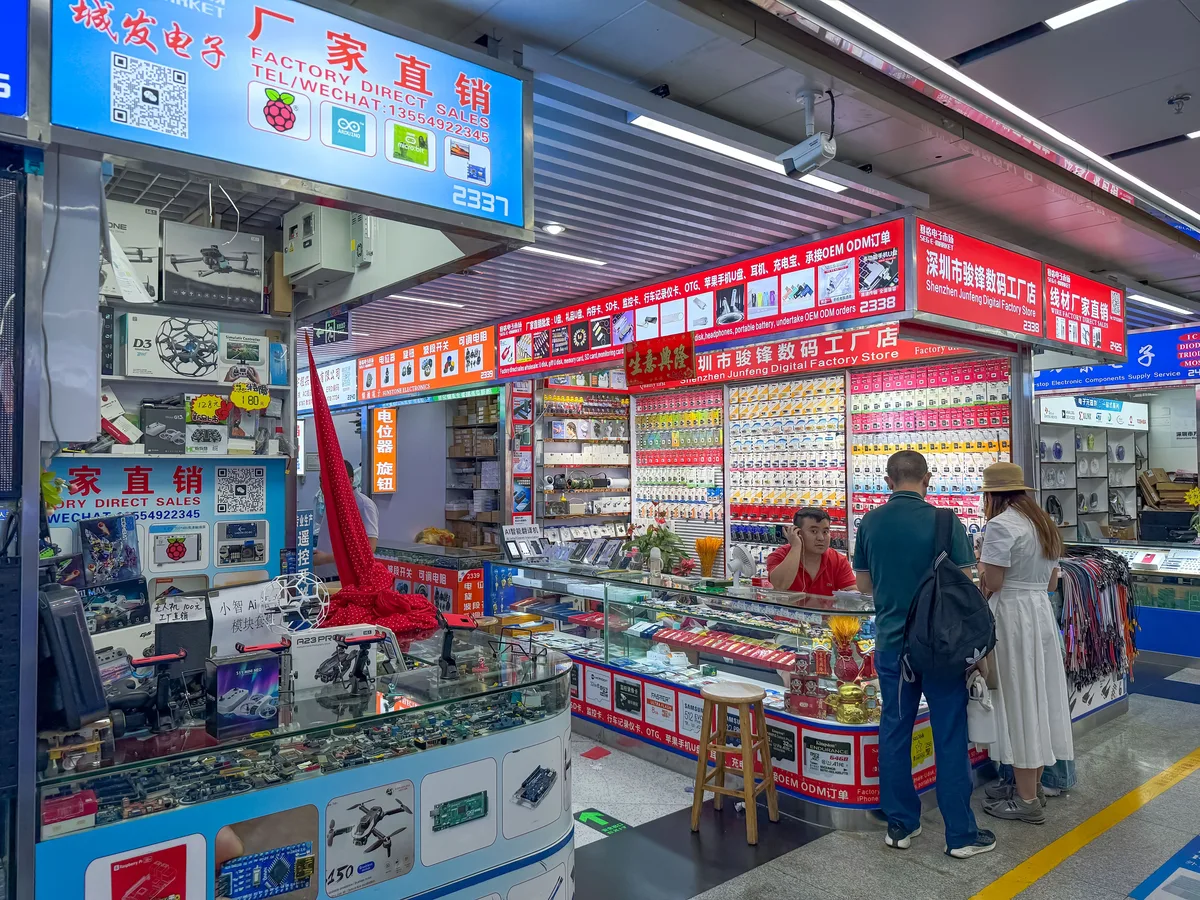
For decades, Silicon Valley held an almost unquestioned monopoly on the world's most consequential technology decisions. But the coastal Chinese city of Shenzhen is increasingly rewriting that narrative — not in software or artificial intelligence, but in the physical architecture of the digital economy: hardware.
Shenzhen's ascent is rooted in a manufacturing ecosystem so dense and responsive that prototyping timelines shrink from months to days. Components, factories, and engineering talent cluster within a remarkably compact geography, giving the city a structural advantage that no American metro area has yet replicated. For U.S. tech firms, ignoring Shenzhen isn't a viable strategy — it is the place where products get built, iterated, and scaled at a pace that remains unmatched.
Read more Taco Bell Cyclospora Outbreak Clouds Yum Brands Earnings Outlook →
The geopolitical tension between Washington and Beijing has complicated, but not severed, this relationship. American companies continue to source critical hardware components and manufacturing capacity from the Shenzhen corridor even as policymakers push for supply chain diversification. The dependency reveals a gap between political ambition and industrial reality that will take years — and enormous capital — to close.
For investors, the Shenzhen-versus-Silicon Valley framing represents a meaningful strategic choice. Betting on Shenzhen means wagering on the durability of China's hardware dominance even amid tariff pressures and export controls. Betting on Silicon Valley means accepting that the software-and-services model can sustain valuation premiums without a comparable physical-world foundation. Neither bet is without risk, and the most sophisticated players are increasingly hedging across both.
As CNBC's China Connection newsletter continues to track these shifting dynamics, the core takeaway remains consistent: Shenzhen is no longer a back-office for American tech ambition — it is a front-line competitor. Continue reading at US Top News and Analysis.