S&P 500 Stalls at Key Level as Options Market Signals Next Move
The S&P 500 is locked in a tug-of-war at a critical threshold, with options dynamics in Chicago quietly steering the market's direction.
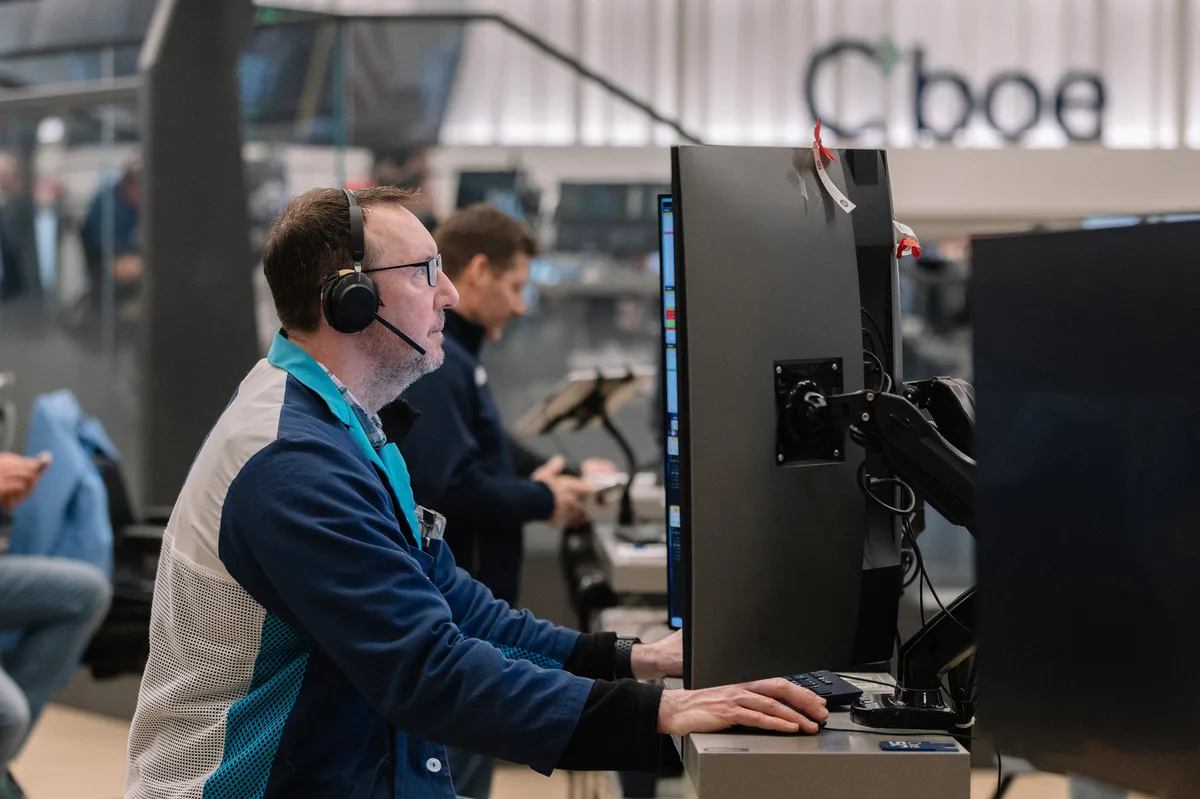
A quiet but consequential battle is playing out in US equity markets, with the S&P 500 pinned at a level that options traders and market makers appear unwilling to let break decisively in either direction. The standoff offers a window into how derivative markets increasingly shape — rather than merely reflect — price action in the underlying index.
Traders in Chicago moved swiftly to buy any dip below 7,500 in the benchmark index, yet proved equally eager to sell into any rally above that same threshold. The result is a market effectively anchored by options positioning, where hedging activity creates self-reinforcing gravitational pull toward a specific price point — a phenomenon sometimes called "pin risk" or gamma pinning among derivatives professionals.
Read more S&P 500 Stalls at Critical Level as Options Market Takes Control →
This dynamic matters beyond the mechanics. When market makers hedge their options books, they must buy and sell the underlying index in ways that can dampen volatility and suppress meaningful price discovery. In practice, it means that what looks like indecision in equities may actually be a structured, if temporary, equilibrium imposed by the derivatives complex rather than any fundamental reassessment by long-term investors.
The broader implication is that investors watching traditional price charts or macro indicators may be missing the real driver of near-term market behavior. An obscure corner of the derivatives market — the positioning of options dealers and how they manage their exposure — can exert outsized influence over where the S&P 500 moves next, particularly during periods of elevated uncertainty when hedging demand surges.
Understanding when that options-driven anchor lifts — whether through an expiration date, a macro shock, or a shift in dealer positioning — may be the critical variable for anticipating the index's next meaningful directional move. Continue reading at US Top News and Analysis.