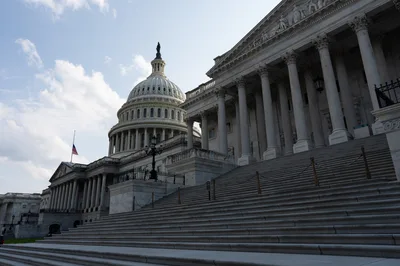
Bipartisan Senators Push for Early Social Security Reform
A bipartisan Senate group wants to reform Social Security before its retirement trust fund runs dry in roughly six years.

A bipartisan coalition of U.S. senators is pressing for early action on Social Security reform, raising alarms about a funding shortfall that could arrive within the decade. The urgency stems from projections suggesting that the trust fund primarily responsible for financing retirement benefits may be depleted in approximately six years — a timeline that gives policymakers a narrowing window to act before automatic benefit cuts would potentially kick in.
The push is notable precisely because it crosses partisan lines at a moment when Washington rarely agrees on much. Social Security has long been considered a political third rail, with lawmakers on both sides reluctant to propose changes that could be characterized as cuts to a program tens of millions of Americans depend on. A bipartisan effort signals that at least some legislators believe the cost of inaction now outweighs the political risk of engaging the issue directly.
Read more Congress Moves to Close Crypto's Wash Sale Tax Loophole →
What "reform" ultimately looks like remains the central and unresolved question. Historically, proposals have ranged from raising the retirement age and adjusting cost-of-living calculations to increasing payroll taxes or lifting the income cap on Social Security contributions. Each option carries distinct distributional consequences — affecting workers, retirees, and high earners very differently — which is why consensus has proven so elusive for decades.
The senators' call for a structured reform process, rather than a specific legislative fix, may itself be strategically significant. By framing the effort as a procedural push — establishing a mechanism for deliberation — the group may be attempting to create political space for negotiations that a single sweeping bill could never survive. Whether that approach can generate enough momentum before the fiscal clock runs out is the defining question hanging over the effort.
Continue reading at US Top News and Analysis.