US and Saudi Arabia Sign Nuclear Cooperation Deal, Await Congress
Washington and Riyadh formalized a landmark nuclear pact on July 22, 2026, setting up a decades-long partnership pending congressional review.

The United States and Saudi Arabia signed a nuclear cooperation agreement on July 22, 2026, with the US Energy Department announcing the deal alongside a bilateral safeguards pact. Together, the two agreements are intended to form the legal architecture for what officials describe as a decades-long, multi-billion dollar partnership — one designed to serve both economic and strategic objectives, including nuclear nonproliferation. The inclusion of safeguards language from the start signals an effort to pre-empt the sharpest criticism likely to come from Capitol Hill and international watchdog communities.
At its core, the deal opens the door for American nuclear technology firms to participate in Saudi Arabia's civilian energy buildout, giving US companies a foothold in what could become one of the more significant nuclear construction markets of the coming decades. Riyadh has long pursued a domestic nuclear power capacity as a means of diversifying its energy mix beyond hydrocarbons — freeing up more oil and gas for export rather than burning it domestically for power generation. That commercial logic has been consistent for years; what is new is the formalized US backing.
Read more Congress Moves to Close Crypto's Wash Sale Tax Loophole →
The agreement carries meaningful geopolitical weight beyond the energy sector. It reinforces the broader US-Saudi strategic relationship at a moment when Gulf security dynamics and OPEC+ production policy remain deeply intertwined. Regional rivals and nonproliferation advocates will be watching closely, particularly given Saudi Arabia's previously stated interest in domestic uranium enrichment — a capability that sits at the sensitive intersection of civilian energy and potential weapons applications. The safeguards pact is meant to address those concerns, though the details will face intense scrutiny.
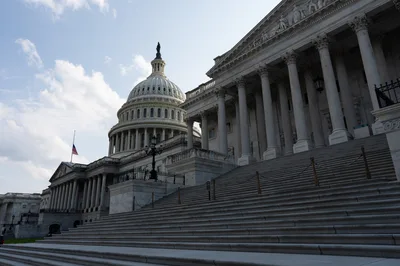
The path forward runs through Congress, which must review the agreement before it can take full effect. That review process introduces political uncertainty into the timeline, as lawmakers are likely to probe the strength of the nonproliferation provisions before lending their approval. Whether the deal advances smoothly or becomes a flashpoint for debate over nuclear security policy in the Middle East may depend largely on how the administration presents the safeguards framework to skeptical legislators.
Continue reading at Forexlive.